

A featured contribution from Leadership Perspectives: a curated forum reserved for leaders nominated by our subscribers and vetted by the Construction Tech Review Advisory Board.

Findex
Cognitive Technology: What Will Watson Become?

Michael Blake
“Computers cannot think”
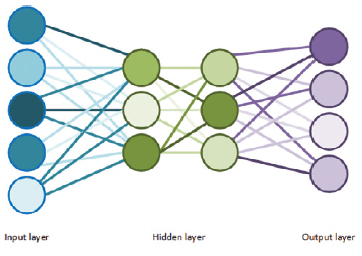
A Neural Net, believed to have been first proposed by the father of computing, Alan Turing in 1948, is represented by a series of “nodes” and connections. The core premise is that the input layer reads information, one or more “hidden layers” which interprets that information, then outputs it’s interpreted version as a value. Each node, like a lightbulb, is either “fully on”, “fully off” or “dimmed” based on external stimuli.
Computers learn by feeding data into the input layer, and allowing them to evaluate and interpret information, feeding results to the output layer. There’s a science to this - good quality input nodes, correctly labelled, result in higher quality outputs. Once the computer begins to understand concepts, it begins to self-learn. If the machine is too quick or too slow to draw conclusions, the neural network is sub-optimal.
Information Everywhere:
We’ve entered a period of almost extreme data collection, creating scenarios where the sheer amount of information being collected by machines, for machines is truly unparallelled. The rate of machine learning is rapidly increasing, and it’s having an impact. Not just the always-improving efficiency and cost-effectiveness of cognitive learning, but how we think about and interact with machines is also shifting as a result.
In mid 2018, Google demonstrated a virtual assistant able to pass for human on a phone call with a hairdresser – it’s called Duplex. Duplex had learned how to understand complex sentences by listening into “a corpus of anonymized phone conversation data”. Google has access to all phone conversations occurring on any Google Voice service including Google Home and “OK Google” on a standard phone. Duplex used it’s ‘knowledge’ and access to Google Calendar to find an available time for the hairdresser booking. It interpreted and answered questions, even interjecting random ‘Umm’s’ and ‘Aah’s’ to appear more human. It “felt” human.
The next task, booking a table at a restaurant for 4 people, went less smoothly - the restaurant didn't require a booking for less than 5 people. The person who answered the phone didn’t quite understand what Duplex was requesting - but the phone conversation was smooth enough.
We’ve entered a period of almost extreme data collection, creating scenarios where the sheer amount of information being collected by machines, for machines is truly unparalleled
Copious amounts of learning materials resulted in two mostly-successful bookings.
However Duplex is not capable of dealing with open-ended conversations. If the restaurant begins explaining that holiday periods are busy, parking might be difficult, or that children are not welcome, the AI would have trouble understanding what it’s meant to do in these scenarios without the context. If a question is asked back, for example some restaurants have stair-only access. “Are you physically impaired?” is a valid question, but might be interpreted incorrectly by Duplex.
Google Duplex is in effect a baby’s brain learning how to react, being trained by listening to its parents. Whilst we wouldn’t normally have toddlers ring restaurants on our behalf, restaurant owners would find it difficult to entirely miss out on customers by ignoring those that use Duplex, or toddlers, to book on their behalf.
Scaling our Collective Knowledge
Feed the computer thousands of conversations or images, and it will rapidly build up confidence in how to interpret these. This is a very simple explanation of Back propagation. Depending on the number of nodes, the computer will need to generalise and make assumptions - e.g. anything with stripes is a zebra and everything else is a horse. The more nodes, the more the computer can store and the less it will generalise.
Predictable roles like compliance, manufacturing and mining, make it easier for a computer to learn - there’s less randomisation, and hence the repetition is easier to program. Less predictable work like sales, marketing and health care rely on complex human interaction making it difficult to scale and learn due to the prohibitive cost of completing the foundational work allowing cognitive technologies to be fully implemented.
For now, sectors like education, data science, project management, and hospitality are partially immune from cognitive technologies as they remain less predictable and have limited risk to human safety. Computers can augment day to day work, but are still some way from being able to successfully interact naturally with humans from end-to-end. Despite this, we are learning to interact with machines during traditionally human-to-human interactions. Think McDonald’s self-order station or the new self-service checkouts in supermarkets.
“Picture a ladder”
Like climbing a ladder, computers can easily assist in dealing with the bottom three rungs on the ladder – the predictable, repeatable initial steps. Beyond this, things become more complex, and we find the edge of the current capabilities of cognitive technology. As you climb to rung four, you need take account of sway and worry more readily about weather conditions in order to remain upright, reducing certainty. Rung five exponentially increases the variables and so on.
Once computers learn enough to ignore specific variables, they can confidently climb the next rung on the ladder, making the fourth rung now as easy to climb as the first three for everyone. Each rung is more complex than the last, as alternatives stack on alternatives and multiply. Eventually we reach the top of the ladder and realise full cognition, at which point machines can then find unique points of difference. Until then, the machines will keep learning.
Check Out : Top Cognitive Technology Startups
