









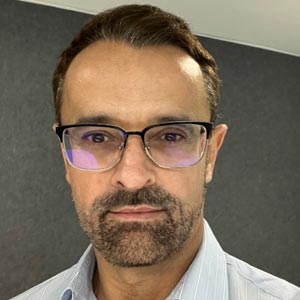


Enhancing Customers' Experience through Technology
Marc A. Hamer, VP & CIO, Babcock & Wilcox Enterprises, Inc.

Marc A. Hamer, VP & CIO, Babcock & Wilcox Enterprises, Inc.
Revolutionizing Business with Technology
The trait that differentiates me is that I don’t believe a CIO’s job as simply running back office IT. As a CIO, I look forward to locate ways to transform the company through technology. I am driven by the highest priority of changing the way a company does business by introducing innovative and latest technologies.
Understanding Cloud Security Challenges
Cloud computing opens up a new world of opportunities for businesses, but mixed in with these opportunities are numerous security challenges. I think there is a huge lack of expertise in cloud technology. Even in IT, people lack trust and are generally confused about using different infrastructures as it might carry high security issues. Hence, there is a lack of knowledge around IT, which is firstly related to cloud computing.
Secondly, I think that one of the stumbling blocks related to getting things done is not having a true partnership with business—because if enterprises are looking from a pure internal IT perspective, then it is more about running a cost center. This is very different from transforming the company through technology.
CIOs need to build a strategy and thought leadership to show enterprises the way to change business that will affect their day to day productivity in a positive manner. My philosophy is to grow the company and prepare them for the future, versus doing the same old tasks.
Technology as a Standalone Feature
If enterprises are consolidating systems then they must run their systems more efficiently and need to standardize workflow across locations and businesses. This could be simplified through common systems that will help drive familiar business process. So, we have combined human resources business processes and implemented one common system globally. We need to create familiar processes so that everyone can see the data. We are able to see employees globally, their work processes, common job titles, performance management, ethics and compliance training processes.
Integrating Data to Gather a Complete View of Customers
With new technological innovations, it is necessary to do a proper requirement gathering. Therefore, it is important to understand the different organizations and the various technologies that are out there.
“We will be able to see employees globally, their work processes, common job titles, performance management, ethics and compliance training processes”
For example, we have sales people all over the world and some of them are using different tools and technologies, which are all consolidated under the Salesforce customer relationship management (CRM) product. Before adopting a CRM tool, we may have overlooked business opportunities because some members of our sales team weren’t necessarily aware of the customer relationships possessed by salespeople in other divisions or departments. After adopting Salesforce, we have been able to build a consolidated sales strategy around our key customers. That's just one example of the importance of having the right data, and accessing it, which is similar to a business intelligence tool.Recommendation for New Solution
Ideas for new IT solutions are only limited by one’s imagination. One that I feel would be particularly useful would be the combination of Apple and Microsoft IT ecosystems. Despite their versatility and their convenience, the iPad and similar tablet devices still haven’t been able to replace the laptop for everyday business purposes. If one were to pair an iPad or other tablet’s processing power and portability with the ability to use Microsoft Office’s suite of applications (Excel, PowerPoint, and Word) the benefits would be immediate and significant.
Modern day industries would appreciate having a small factory unit but there are still a lot of technologies that are yet to talk to each other. It is important to understand that, when one organization buys another, sometimes it creates a hotchpotch of HR, finance, transportation and procurement systems. As a result, the organization starts operating in an inefficient manner as they do not understand all their data that their business is using.
Disruptive Trends
From a pure data perspective, one can build a global warehouse and pull data from multiple enterprise resource planning software applications and then process it. But there is not any easy inexpensive way to do that. We are creating trends related to mobilization and workflow automation processes. We have different software packages through which we can automate those workflow processes, and it usually leads to cost-savings and efficiency. Talking in terms of mobilization, enterprises can pull data from multiple systems and put it in the form of a mobile tool, where customers can see the data that they want.
Changing Role of IT
I understand business as well as finance, so I can sit down with any of our three division presidents and talk to them about the innovations. I can discuss the markings being higher, and the reason behind taking immense amount of time to get a product out of the door. This could be because the processes are not automated. In the past, we had four to five sales organizations that didn't didn’t communicate well and weren’t intimately familiar with each other’s customer base. Today, we are one sales organization with one system globally. We have really transformed the way IT operates from sales and manufacturing perspective. We are also implementing a common transportation system, procurement system, HR system and financial system – basically we are uniting all the departments.
Creating a New Vision
A good CIO understands the business and the way to run it. My role is like a chief transformation officer. I believe in forwarding the company's offerings in an efficient manner. My perception is to bring change in all pieces and parts of the company. I encourage my team to go out and meet with high-end technological organizations. I usually conduct meetings with CEOs and contact technical folks of other organizations and comprehend their market strategy. For new and emerging CIOs, I would advise them to understand their business and their company’s product offerings which will eventually help them to evolve as an asset for the company.

